
Our Certifications
Click the image to view.


Shilajit Gummies Built on Verifiable Specifications
- Purified Shilajit screening with origin and batch documentation
- Dose basis confirmed before your formulation and label development
- Fulvic acid specification reviewed with defined analytical methods
- Heavy-metal limits checked against your intended daily serving
- Pectin or gelatin systems matched to your ingredient load
- Full-serving flavor masking validated before your commercial scale-up
Private Label Shilajit Gummies with Clearer Specifications
Shilajit gummies offer a convenient alternative to traditional shilajit forms. But the final product can vary a lot. The raw-material form, dose basis and gummy system all matter. Purified powder or dry extract can be used. For 3000 mg or 4000 mg shilajit gummies, you also need to define what the number means. It may refer to actual input or a documented equivalent. Shilajit also has a dark color and a resin-like aftertaste.
Sucotond develops your private label shilajit gummies around an approved raw-material specification, fulvic acid target, contaminant limits and serving size. We then adjust gummy weight, pectin or gelatin system, flavor masking and drying conditions. This helps turn your approved sample into a repeatable commercial specification.
Build Your Shilajit Gummies Range Around Real Formula Differences
SUCOTOND plans each Shilajit Gummies SKU around a different raw-material specification, dose basis or formulation requirement—not simply a different label. Before sampling, we define the shilajit form, actual input, serving size and testing requirements so each product has a clear reason to exist in your range.
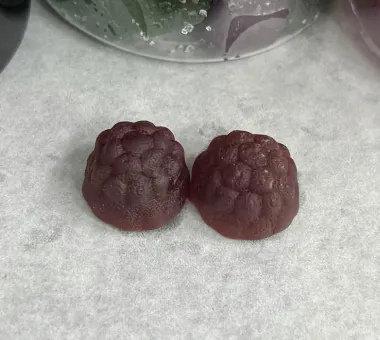
Pure Himalayan Shilajit Gummies
For your Pure Himalayan Shilajit Gummies, use purified shilajit with traceable origin documentation. Sucotond defines the fulvic acid specification and heavy-metal limits before formulation. Then we match the actual ingredient load to your target gummy weight and serving size.
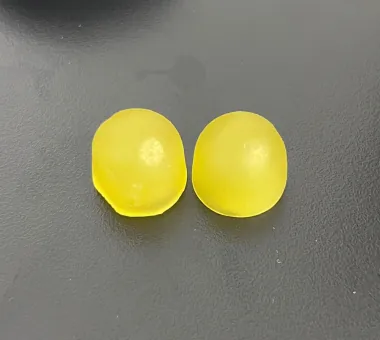
3000 mg Shilajit Gummies
First define whether your 3000 mg claim represents actual shilajit input or a documented raw-material equivalent. Sucotond then calculates the real per-serving input and determines whether one or two gummies provide the more practical commercial format for your product.
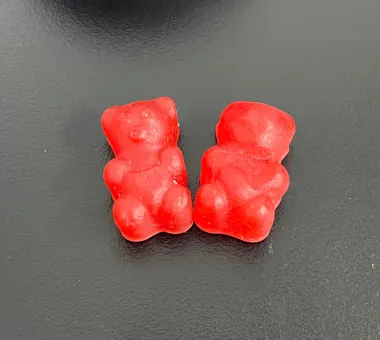
4000 mg Shilajit Gummies
For your 4000 mg shilajit gummies concept, Sucotond checks hot-mass viscosity, depositing stability and gummy weight during pilot trials before the serving format is approved.
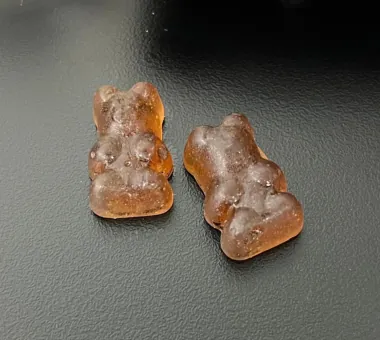
Shilajit Gummies for Men
Build a men-focused SKU only when your formula supports a real difference. You can keep shilajit as the core ingredient while complementary ingredients such as ashwagandha are evaluated for total load, taste and gummy compatibility.
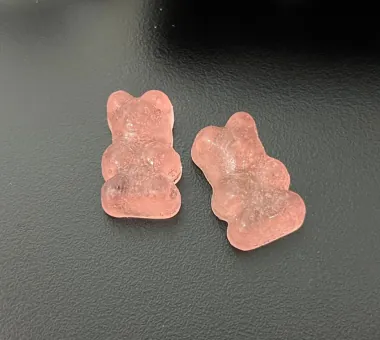
Shilajit Gummies for Women
Your women-focused SKU can use the same approved shilajit specification while changing the serving design, complementary nutrients, flavor direction or gummy size.
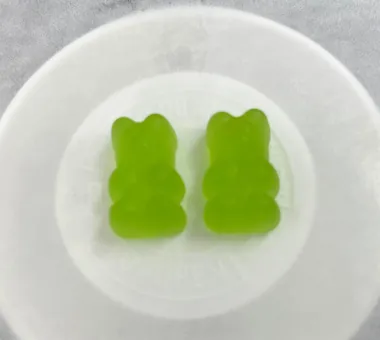
Natural Shilajit Gummies
For your natural shilajit gummies, Sucotond reviews the complete formula, not just the shilajit itself. We check carriers, flavors, colors, sweeteners and glazing ingredients. We then adjust the formula so your finished gummy better supports your intended natural positioning.
Two Shilajit Gummy Projects That Needed More Than a Good Idea
Shilajit gummy projects often look simple at the concept stage. In practice, the real work starts when the raw-material form, label claim, sensory profile, and commercial process need to match. These two examples show where projects usually need adjustment before they are ready for sample approval and scale-up.

3000 mg Pure Himalayan Shilajit Gummies for a U.S. Brand
Sucotond first clarified whether the 3000 mg claim referred to actual shilajit input or a raw-material equivalent, then fixed the approved shilajit grade and matched the target load to gummy weight and serving size. This gave the customer one clear specification for sample review, supplier comparison, and later production instead of leaving the project exposed to dose-basis confusion.
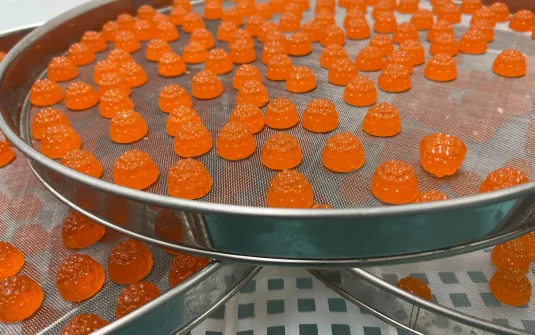
Natural Shilajit Gummies with Better Flavor Fit
Sucotond reviewed the complete formula rather than the shilajit alone. Carriers, flavors, colors, and sweeteners were checked together, and the gummy system was adjusted to better support the intended positioning. This helped the customer move toward a formula that looked more consistent with the natural concept while staying more workable for trial and future scale-up.
Resource Center
Catalog Download
You can view and download our product catalog here to gain a comprehensive understanding of the gummy categories we offer. We believe you will be pleasantly surprised.
DownloadCertifications Download
You can view and download our certificates and reports here. Internationally recognized certifications and unified standards are our most sincere assurance to you.
DownloadVideos
You can take a look at our factory, production lines, and products here. Seeing is believing, and we're committed to building your trust through every possible means.
Watch VideoMore About Sucotond
| Parameter | Development Range / Option | Project Requirement |
|---|---|---|
| Shilajit Form | Purified powder / dry extract | Confirm supplier specification before formulation |
| Dose Claim Basis | Actual input / documented equivalent | Define before label and sample approval |
| Label Positioning | Pure / Himalayan / Natural | Supporting documents required |
| Serving Size | 1–2 gummies | Match dose and gummy load |
| Gummy Weight | 2.5–4.0 g | Adjust after solids-load trial |
| Gummy Base | Pectin / Gelatin | Match market and texture target |
| Sugar System | Standard / Reduced Sugar / Sugar-Free | Revalidate texture and water activity |
| flavor | Berry / Pomegranate / Mixed Fruit / Custom | Screen against shilajit aftertaste |
| color | Brown-red / Dark berry / Natural dark tone | Match raw-material color variation |
| Typical pH Target | 3.2–3.8 | Finalise by gummy base and flavor system |
| Water Activity Target | ≤0.60 | Confirm after drying and during stability |
| Shape | Bear / Drop / Cube / Custom Mold | Match target weight and deposit volume |
| Packaging | Bottle / Pouch / Blister | Confirm against moisture protection needs |
| Target Shelf Life | 18–24 months | Release only with supporting stability data |
| Test Item | Method / Control | Proposed Release Basis |
|---|---|---|
| Raw-Material Identity | Supplier specification + identity verification | Match approved shilajit specification |
| Origin Documentation | Supplier and batch records | Required when Himalayan wording is used |
| Purification Status | Supplier process documentation | Confirm approved purified grade |
| Fulvic Acid / Marker | Validated supplier or agreed analytical method | Match approved COA specification |
| Pb / Cd / As / Hg | ICP-MS preferred; ICP-OES where sensitivity is adequate | Set market- and serving-based acceptance criteria |
| TAMC / TYMC | Applicable microbiological method | Set project release criteria |
| E. coli / Salmonella | Applicable microbiological method | Absent / compliant with target-market specification |
| Water Activity | Aw meter | Target ≤0.60 unless formula data support another limit |
| Gummy Weight | In-process gravimetric check | Approved target ± project tolerance |
| Appearance / Texture | Approved reference + texture check | Compare color, surface, shape and chew |
| Stability | Initial + scheduled stability points | Support claimed shelf life |
| You Provide | Example | Why It Matters |
|---|---|---|
| Target Market | US / EU / UK | Determines label and test requirements |
| Shilajit Type | Powder / Dry Extract | Changes load and dispersion |
| Target Claim | 500 mg / 3000 mg / 4000 mg | Requires dose-basis definition |
| Claim Basis | Actual / Equivalent | Prevents ambiguous label numbers |
| Gummies per Serving | 1 / 2 | Determines per-gummy load |
| Gummy Base | Pectin / Gelatin | Changes process and texture |
| Sugar Requirement | Standard / Low / Sugar-Free | Changes drying and Aw |
| flavor Direction | Berry / Pomegranate / Other | Needed for masking trials |
| Additional Actives | Vitamins / Minerals / Botanicals | Requires compatibility review |
| Packaging | Bottle / Pouch / Blister | Used in stability planning |
| Required Tests | Standard / Custom | Defines release specification |
| Target Launch Date | Project date | Used for sampling and scale-up planning |
What Should You Understand Before Comparing Shilajit Gummies?
Two products called shilajit gummies can look similar on the shelf and still be very different products.
The first difference is the shilajit material itself. A gummy may use purified powder, dry extract, or a resin-derived ingredient. These forms can differ in concentration, moisture, carrier content, and handling behavior. A product made from shilajit powder should therefore not be compared with a resin-based formula only by looking at the milligram number on the front label.
The format also matters. Shilajit resin, shilajit capsules, and gummies solve different product-development problems. Capsules can carry dry materials without flavor masking or gummy processing. Resin has its own serving and handling characteristics. Gummies add questions about texture, flavor, depositing, drying, and the amount that can fit into each piece.
Before comparing products or quotations, ask what exact shilajit material enters the formula, how much is actually used per serving, and how the label claim is calculated.
That information gives you the starting point for deciding whether the raw material itself is worth approving.
What Should You Verify Before Approving a Shilajit Raw Material?
After you know which material will be used, the next step is to separate measurable quality from marketing language.
For Himalayan shilajit gummies, check whether the origin is supported by supplier and batch documentation. For pure shilajit gummies, define what "pure" means in your purchasing specification instead of treating it as a general quality claim. Natural shilajit gummies require another level of review because the finished formula also contains flavors, colors, sweeteners, carriers, and other supporting ingredients.
The analytical specification should be treated separately from those positioning terms.
If fulvic acid is part of your quality standard, ask what is measured, which analytical method is used, and what acceptance range applies. Do not compare two fulvic acid percentages until you know they were measured on a comparable basis.
The same applies to trace minerals. A broader mineral profile does not automatically mean a stronger raw material, and it does not replace contaminant testing.
A useful purchasing sequence is:
identity and origin → purification → analytical markers → contaminants → batch documentation
If any of these change when you switch suppliers, the new material should be reviewed before the previous gummy specification is reused.
How Should You Read a 3000 mg or 4000 mg Shilajit Gummy Claim?
After the raw material is defined, the label dose becomes much easier to interpret.
A 3000 mg shilajit gummy or 4000 mg shilajit gummy does not always contain 3000 or 4000 mg of physical shilajit material.
The number may refer to actual ingredient input, extract quantity, a documented raw-material equivalent, or the total amount across several gummies.
These calculations can produce very different formulas.
Before approving a sample or quotation, ask the supplier to show the calculation from the approved raw material to the finished serving. Then convert that number into the actual load per gummy.
For example, a high equivalent claim may still use a moderate physical input, while a high actual-input formula may require larger gummies or more than one gummy per serving.
This is why shilajit dosage, gummies per serving, and bottle count should be planned together. Questions such as how many shilajit gummies per day should be answered from the approved dose basis and serving design, not copied from another product.
A practical sequence is:
dose basis → amount per serving → amount per gummy → gummies per serving → bottle count
Do not begin with "60 gummies per bottle" and force the formula to fit the packaging afterward.
A clear serving calculation also tells you whether the intended dose can realistically work in a gummy format.
Can Your Target Shilajit Dose Actually Work in a Gummy?
This is where a label concept becomes a manufacturing decision.
Higher shilajit input increases the solids in the gummy mass. It can change viscosity, depositing behavior, individual gummy weight, color, and flavor. A formula that runs well at a lower input may behave differently when the commercial dose is added.
During a pilot trial, useful checkpoints include pH, soluble solids, hot-mass viscosity, and individual gummy weight. Front-, middle-, and end-of-run samples can then be compared to see whether weight and appearance remain consistent through the batch.
Heat exposure also matters when fulvic acid retention is part of the specification. Instead of assuming one fixed loss percentage, define the shilajit addition window and hot-mass residence time. Compare the approved raw material and finished gummy using the same analytical basis before deciding whether additional input is necessary.
Flavor should also be tested at the real commercial load. Shilajit can bring a dark color and a resin-like, mineral aftertaste. Berry, pomegranate, or other darker flavor systems may fit the ingredient more naturally than a pale or transparent concept.
If the product is also vegan shilajit gummies or sugar-free shilajit gummies, the gummy base and sugar system need their own validation because pectin, sweetener systems, drying, chew, and water activity can all change.
The goal is not simply to fit more shilajit into one gummy. The goal is to find a serving format that can be reproduced consistently in commercial production.
How Should You Evaluate Shilajit Gummies Benefits, Side Effects, and Product Claims?
After the formula is defined, the next question is what the finished product can reasonably say.
Topics such as shilajit gummies benefits, do shilajit gummies work, and shilajit gummies side effects attract strong customer interest, but they should not be handled by copying claims from another brand.
Start with the evidence behind the ingredient.
Ask:
-
What shilajit material was studied?
-
What dose was used?
-
Is that material comparable with your approved raw material?
-
Is the serving level comparable with your formula?
-
Does the finished product contain other active ingredients that change the context?
The same approach should be used for safety and precaution language. A general statement about shilajit should not automatically be applied to every gummy formula.
This becomes even more important when you add other botanicals, vitamins, or minerals. A shilajit-and-ashwagandha gummy is a different formulation from a single-ingredient shilajit gummy, so the serving design and product claims should be reviewed as a combined product.
Technical specifications and claim evidence answer different questions. Keep them separate before artwork is approved.
What Can Shilajit Gummies Reviews Really Tell You?
Analytical testing tells you whether a specification is met. Shilajit gummies reviews tell you something different: how consumers experience the product.
That makes reviews useful during product development, but only when you use them for the right purpose.
Look for repeated comments about flavor, resin-like aftertaste, chew, gummy size, serving convenience, bottle design, and packaging.
If many users complain that the gummy is too large, you may need to reconsider the amount per gummy or move from one gummy to two gummies per serving.
If the same aftertaste appears repeatedly in reviews, another flavor trial may be more useful than simply adding more flavor to the existing formula.
However, Himalayan shilajit gummies reviews cannot prove Himalayan origin, raw-material identity, fulvic acid level, actual ingredient input, or heavy-metal compliance.
A high rating is market feedback, not analytical evidence.
Use reviews to identify product-experience problems. Use specifications, COAs, and test results to evaluate product quality.
When Does a Separate Shilajit Gummy SKU Actually Make Sense?
Consumer interest in shilajit gummies for men, shilajit gummies for women, shilajit energy gummies, combination formulas, and gold shilajit gummies can make a large product line look attractive.
But every new SKU should have a clear reason to exist.
A men's and women's version should not be separated only by package color or unsupported positioning. A real SKU difference may come from serving size, complementary ingredients, flavor direction, gummy weight, or another defined formulation decision.
The same rule applies to shilajit with ashwagandha. Adding another botanical changes the total active load, flavor, serving architecture, and qualification requirements. It should be treated as a new formula rather than a label variation.
The same applies to shilajit energy gummies. The "energy" positioning should come from a defined formula and supportable claims, not from the product name alone.
"Gold" needs similar caution. Gold shilajit gummies do not represent one universally standardized grade. If you use the term, define whether it refers to a product line, raw-material positioning, or another specific concept. Do not use "Gold" alone as proof of purity, Himalayan origin, a higher fulvic acid level, or a larger dose.
Before adding another SKU, ask one practical question:
What actually changes in the product besides the name?
If the answer is "very little," the extra SKU may only add inventory, artwork, testing, and MOQ complexity.
How Should You Verify Quality and Compare Shilajit Gummy Suppliers?
The final comparison should combine raw-material evidence, finished-product testing, and commercial specifications.
For a lab-tested shilajit raw material, confirm what the laboratory actually tests. Separate identity, analytical markers, and contaminants. For heavy metals in shilajit, confirm the elements, method, and acceptance criteria that apply to your target market and serving size.
Also check whether the COA is batch-specific.
Raw-material approval is only the first quality gate. Finished shilajit gummies have already gone through weighing, mixing, heating, depositing, and drying, so the commercial batch needs its own release criteria.
Depending on the formula, this can include composition, microbiology, individual gummy weight, appearance, texture, and water activity. Stability should then follow the approved commercial formula and packaging rather than relying only on raw-material data.
When you compare suppliers for private label shilajit gummies, give each supplier the same specification:
- same shilajit grade
- same dose basis
- same actual input or equivalent calculation
- same gummies per serving
- same testing scope
- same packaging requirement
Only then does the quotation become comparable.
Bottle price alone can be misleading. Compare cost per serving or cost per actual active input instead.
That approach helps you compare products based on what is actually being supplied, tested, and delivered rather than on the largest number printed on the front label.
Frequently Asked Questions
Common questions about custom gummy supplement manufacturing, private label service, and production support.