
Our Certifications
Click the image to view.


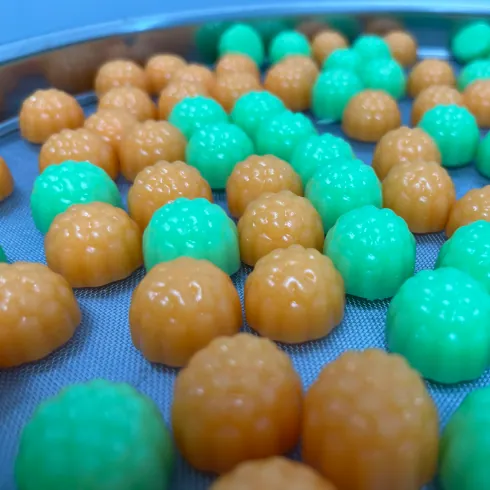
Features of Custom Energy Gummies
- Total caffeine includes contributions from botanical ingredients
- B12 premixing addresses distribution within larger active blends
- CoQ10 carriers selected for dispersion within the gummy
- Flavor trials compare bitterness at equal caffeine per serving
- Serving specifications separate per-piece and per-serving caffeine amounts
Energy Gummies Developed Around Your Formula
Energy gummies give adult supplement brands a chewable option for daytime alertness or nutritional energy support. Caffeine formulas suit work and study settings, while caffeine-free B-vitamin blends fit daily wellness ranges. Stimulant formulas are unsuitable for bedtime positioning or audiences avoiding caffeine.
As an energy gummy manufacturer, SUCOTOND develops private label energy gummies around these formulation differences. We pair caffeine targets with bitterness trials, specify L-theanine independently, and address B12 premixing or CoQ10 dispersion in nutrient blends. Our OEM/ODM approach connects active specifications with serving size and packaging, helping you compare samples at matched strengths and develop an energy supplement that fits your brand's positioning.
Energy Gummies Formulation Options
Choose from six adult energy gummy concepts with distinct ingredient combinations. Sugar-free, vegan, flavor, and packaging preferences are additional development choices within each concept, subject to formulation and sample review.

Caffeine Energy Gummies
A straightforward caffeine gummy for adult alertness lines, centered on a specified caffeine amount rather than a large nutrient blend. Fruit, coffee, or cocoa flavors give the concept different sensory identities.

Caffeine and L-Theanine Energy Gummies
Pair caffeine with L-theanine for an adult energy and focus concept. Both ingredients have their own declared amounts, allowing your brand to distinguish the blend through composition and serving strength.
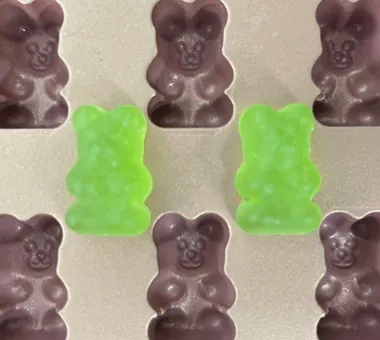
Guarana, Taurine, and B-Vitamin Energy Gummies
Guarana, taurine, and selected B vitamins create a formula inspired by familiar energy drink ingredient combinations. Guarana supplies botanical caffeine, while the added nutrients distinguish this blend from a caffeine-only gummy.
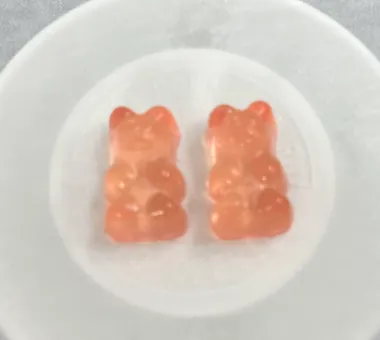
Caffeine-Free Vitamin B12 Energy Gummies
A caffeine-free formula centered on vitamin B12 for brands building a focused nutritional supplement. Its single-vitamin identity keeps the product distinct from stimulant blends and broader B-complex energy gummies.

Caffeine-Free B-Complex Energy Gummies
Combine niacin, vitamin B6, biotin, folate, and B12 in a caffeine-free nutritional gummy. This five-vitamin concept offers a broader B-vitamin profile than B12 alone for your daily wellness range.
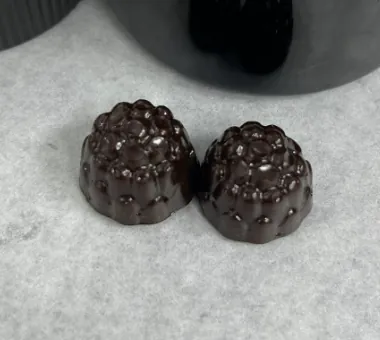
Caffeine-Free B12 and CoQ10 Energy Gummies
Combine B12 with CoQ10 in a caffeine-free daily wellness gummy, with goji as an optional botanical addition. The nutrient and coenzyme pairing differentiates this concept from B-vitamin-only formulas.
Energy Gummies Development Scenarios
These illustrative scenarios show how Sucotond would develop two different briefs: a defined caffeine and L-theanine portion, and a caffeine-free nutrient blend with vegan requirements.

Keeping the Caffeine Serving Consistent Across Flavor Trials
Sucotond would translate that brief into average targets of 50 mg caffeine and 50 mg L-theanine per piece, including any botanical caffeine in the total. We would hold both active targets constant across the flavor and sweetener trials so a milder sample does not gain its advantage from containing less caffeine. The proposed deliverables would include a serving specification, comparative sample notes on bitterness and aftertaste, and an assay and sampling plan for both actives.
Combining Microgram B12 With CoQ10 in a Vegan Concept
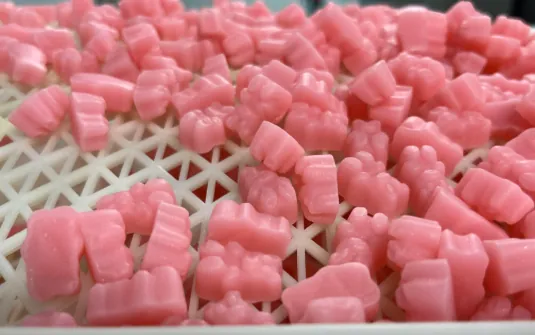
This brief combines a microgram-level vitamin with CoQ10, which needs a suitable dispersion approach. Sucotond would propose a B12 premix and review the CoQ10 form and carrier before planning a pectin-based sample. We would also check the carriers, coating, and any goji ingredient against the vegan brief. Your proposed formula and sample review would address active distribution, visible particles, and texture, with separate content and storage checks planned for the selected actives.
Resource Center
Catalog Download
You can view and download our product catalog here to gain a comprehensive understanding of the gummy categories we offer. We believe you will be pleasantly surprised.
DownloadCertifications Download
You can view and download our certificates and reports here. Internationally recognized certifications and unified standards are our most sincere assurance to you.
DownloadVideos
You can take a look at our factory, production lines, and products here. Seeing is believing, and we're committed to building your trust through every possible means.
Watch VideoMore About Sucotond
| Formula or parameter | Reference or development direction | Specification to establish |
|---|---|---|
| Caffeine | Illustrative target: 100 mg per two gummies, averaging 50 mg per piece | Total caffeine from direct and botanical sources; intended daily servings |
| Caffeine and L-theanine | US market reference: 100 mg of each per two gummies | Specify each active separately; the ratio is a formulation choice |
| Guarana, taurine, and B vitamins | Botanical caffeine combined with taurine and a selected B-vitamin blend | Guarana identity and caffeine content; taurine amount; individual vitamin amounts |
| B12 only | US market reference: 1,000 mcg per two gummies, averaging 500 mcg per piece | B12 form and strength; premix composition; final serving size |
| B-complex | Five-vitamin concept: niacin, B6, biotin, folate, and B12 | Individual amounts and forms; this concept does not include all eight B vitamins |
| B12 and CoQ10 | Caffeine-free nutrient and coenzyme blend; goji optional | Separate B12 and CoQ10 amounts; CoQ10 carrier; goji extract or juice powder identity |
| Sugar and gummy base | Sugar-containing or sugar-free concept; pectin or gelatin assessed with the active blend | Bitterness at the intended caffeine strength; CoQ10 dispersion; complete vegan ingredient review where requested |
| Portion and pack count | Bottle, pouch, or portion-pack concept; 60 gummies equal 30 two-gummy servings | Pieces per serving, caffeine per piece where relevant, pack count, and storage conditions |
| Review item | Energy gummy assessment | Evidence for approval |
|---|---|---|
| Total caffeine | Reconcile direct caffeine with caffeine contributed by guarana or other botanical ingredients | Ingredient caffeine data and a finished-gummy assay suited to the matrix |
| Caffeine and L-theanine distribution | Compare representative pieces or servings across the production run; assess each active separately | Agreed sampling plan and results for each specified active |
| B12 and B-vitamin content | Check microgram and milligram units, premix dilution, and each vitamin intended for declaration | Ingredient specifications and appropriate finished-product assays |
| CoQ10 incorporation | Review the selected form and carrier, dispersion, and visible particles | Sample observations and separate CoQ10 content results |
| Caffeine-free concept | Review the complete blend for caffeine-containing ingredients, including botanical additions | Ingredient records and any assay agreed for the proposed declaration |
| Flavor and sugar system | Compare bitterness and aftertaste at matched active strengths; review the complete sugar-free formulation where requested | Approved sensory reference and data supporting the intended sugar claim |
| Botanical quality and storage | Set ingredient-specific contaminant checks; track selected actives, color, and texture in the intended pack | Relevant analytical reports and stability data under defined storage conditions |
| Brief detail | Information to provide |
|---|---|
| Product purpose | Adult alertness, caffeine and L-theanine, botanical energy blend, B12 nutrition, B-complex, or B12 with CoQ10 |
| Caffeine specification | Target total per serving, preferred sources, any excluded sources, and intended pieces per serving |
| Nutrient composition | Each B-vitamin amount and form; CoQ10 amount and carrier preference; whether goji is part of the brief |
| Planned use and markets | Intended daily servings and adult audience; US launch plus the additional countries for ingredient and label review |
| Taste and dietary choices | Fruit, coffee, or cocoa direction; sugar-free request; vegan requirements covering active carriers as well as the gummy base |
| Pack and serving relationship | Bottle, pouch, or portion pack; desired piece count and servings per pack; anticipated storage conditions |
| Development inputs | Existing formula, reference product, or customer-supplied ingredients, including caffeine data and premix or carrier specifications |
| Quotation and sample scope | Expected order quantity and timing; target active strengths; requested formula variants, assays, and packaging work |
What Kind of Energy Should Your Gummy Deliver?
Feeling Alert and Supporting Energy Metabolism Are Different Goals
Energy gummies are chewable supplements or sports products whose purpose depends on their ingredients. For your product line, define the result customers should expect: feeling more alert, supporting normal energy metabolism, or obtaining carbohydrate fuel during exercise. These benefits require different specifications.
Caffeine gummies address alertness. Caffeine-free energy gummies containing B vitamins serve a nutritional purpose. Vitamin B12 is involved in energy metabolism, but supplementation has not shown performance benefits in people without a nutritional deficit. A higher B12 number therefore cannot establish a stronger immediate pick-me-up. Evaluate an energy vitamin gummy against its nutritional purpose and evidence, rather than the sensation expected from caffeine.
Running Fuel Requires a Different Specification
For energy gummies for running, establish whether customers need carbohydrate fuel, caffeine, or both. Sports energy chews can supply carbohydrate during prolonged exercise; some also include caffeine. Electrolytes address another requirement and should be considered alongside fluid intake.
If the brief is endurance fuel, carbohydrate grams become a central purchasing specification. If it is daytime alertness, caffeine content takes that role. Pre-workout gummies also need a defined purpose; the name alone does not establish that the formula supplies meaningful carbohydrate or supports a particular exercise outcome.
Compare Formats That Serve the Same Purpose
For the intended purpose, compare the gummy serving with other formats your customers might use. For coffee or energy drinks, compare actual caffeine and sugar amounts rather than an undefined cup equivalent. Gummies offer a chewable serving without a beverage, while drinks provide a different consumption experience. Pills or capsules may suit customers who prefer swallowing to a sweet chew; no format automatically establishes superior absorption.
For running fuel, compare energy chews vs gels by carbohydrate amount, portioning, chewing, fluid use, and carrying convenience. Match the format to the planned occasion before treating its pack price as a value comparison.
Match the Ingredient Blend to That Energy Experience
Compare Actual Caffeine Before Comparing Sources or Speed
For an alertness product, establish total caffeine from direct additions and botanical ingredients such as guarana or green tea. Extract weight and caffeine weight are separate quantities. Request the ingredient's caffeine specification and calculate its contribution before comparing blends. Plant-derived caffeine does not automatically provide a safer or gentler effect.
Compare onset, peak effect, and duration at a defined caffeine amount and in the relevant delivery format. Chewing a gummy does not itself establish faster action than coffee, pills, or energy drinks.
Give Each Focus Ingredient a Defined Role
Adding L-theanine creates a different brief from caffeine alone. One controlled study evaluated 50 mg caffeine with 100 mg L-theanine; that combination cannot establish the performance of every ratio or finished product. Match evidence to the intended amounts and outcome. Improved performance on an attention task is a different claim from eliminating jitters or preventing a crash.
Apply the same reasoning to taurine, ginseng, or other botanicals. For mushroom or shilajit additions, identify the specific ingredient, preparation, proposed amount, and supporting evidence. Keep an extra ingredient when it serves your intended energy and focus positioning; a longer ingredient list alone offers no clear purchasing advantage.
Specify B12, B-Complex, and CoQ10 Separately
For a caffeine-free nutritional product, compare B12 alone with the actual composition of a B-complex blend. A five-vitamin concept might contain niacin, B6, biotin, folate, and B12; it is not automatically a complete eight-vitamin blend. List each vitamin and amount, keeping micrograms and milligrams distinct. Set those amounts against the nutritional purpose and sales-market requirements rather than maximizing every label number. Methylcobalamin and cyanocobalamin are both supplement forms; NIH reports no evidence that supplement absorption rates differ by B12 form.
For a B12-and-CoQ10 blend, specify the CoQ10 form and carrier. If the blend also contains goji, distinguish extract from juice powder. These additions need their own purpose and evidence; they do not establish rapid or sustained energy simply by appearing together. Compare their amounts using the same planned daily serving.
Set Serving Strength Around Your Intended Users
Make Audience Differences Specific
For energy gummies for men and women, require a reason for any formula difference: nutrient needs, intended use, or another supported condition. Sex-specific packaging alone does not justify different stimulant strengths.
Energy gummies for adults also cannot become energy gummies for kids merely by reducing the piece count. A children's concept needs its own ingredient, dose, suitability, and labeling assessment. Pregnancy, breastfeeding, medication use, and caffeine sensitivity require separate consideration rather than inclusion in a blanket adult suitability claim.
Connect Each Piece to the Full Serving
Define the serving around the amount that matters for your chosen purpose: caffeine, individual vitamins, or carbohydrate fuel. As a calculation example, 100 mg caffeine per two gummies averages 50 mg per piece. One serving supplies 100 mg; two servings supply 200 mg before coffee, tea, or other supplements. This illustrates exposure, not a recommended intake.
Specify each active amount, pieces per serving, and intended daily servings; for caffeine formulas, account for caffeine from all sources. Packaging count is a separate field. A stronger single gummy may reduce the number of pieces needed, while making casual extra pieces more consequential. Avoid relying on customers to cut a gummy into accurate smaller doses unless that use is supported.
Assess Duration, Sleep, and Repeat Use Together
A noticeable stimulant effect does not establish a suitable daily-use product. Caffeine sensitivity and elimination vary, and adverse effects can include sleep disruption, anxiety, palpitations, and digestive upset.
For work or study positioning, evaluate the intended time of use alongside serving strength. A late-day repeat serving may undermine the routine your product is meant to support. Discuss tolerance and repeated use when reviewing evidence; a first-dose response cannot establish a consistent long-term experience. Avoid solving a weak sustained-energy proposition by simply increasing caffeine or assuming L-theanine removes its drawbacks.
Which Dietary Choices Fit the Same Product?
Compare Sugar-Free Samples at the Intended Active Strength
The planned serving also determines how much sweetener and gummy base customers consume. Caffeine and botanical bitterness can change the appeal of sugar-free energy gummies. Compare flavor, acidity, sweetness, aftertaste, chew, and tooth sticking while holding active amounts and serving size constant.
Review total sugars, added sugar, carbohydrates, calories, sugar alcohols, and any added fiber. Sugar alcohols can cause gas, bloating, or diarrhea in some people, so include their amount in the serving review.
Sugar-free claims require a separate labeling assessment; removing sucrose is insufficient. Also revisit the original purpose: reducing carbohydrate in an endurance-fuel product changes what it delivers.
Distinguish Vegan, Natural, and Organic Requirements
For vegan energy gummies, exclude gelatin and review the sources of active carriers, coatings, and every other ingredient. Choosing pectin alone does not establish that the complete formula is vegan. Compare alternative plant-based gummy systems using the same active blend and serving, since texture remains part of the product decision.
Define what you mean by natural energy gummies or clean label: caffeine source, flavoring, coloring, or another ingredient requirement. Treat organic as a separate certification and labeling question, rather than an extension of natural positioning. USDA organic labeling has specific requirements.
Similarly, specify gluten-free and allergen requirements independently. Retain attributes your customers need, with documentation that matches the complete product.
Verify the Finished Gummy and Its Label Claims
Connect Formulation Controls to Finished-Product Tests
The selected recipe and acceptable taste sample establish a design. Supply approval needs evidence that the finished gummy meets it. High ingredient loading can affect feasible gummy weight and piece count; microgram-level B12 requires a suitable premix and distribution approach; CoQ10 requires attention to its form, carrier, and dispersion.
Request finished-product assays for specified actives and an agreed sampling plan for individual pieces or servings across production. Ask whether methods, including any proposed HPLC assay, are suitable for the gummy matrix. A raw-material certificate of analysis or a site-level certification cannot establish finished-gummy content or piece-to-piece uniformity. Confirm whether any other certificate covers the specific product or a defined testing program.
Agree relevant microbiological, heavy-metal, and botanical-contaminant checks. Under US supplement rules, specification verification uses appropriate, scientifically valid methods; this does not prescribe one universal gummy assay or sampling limit.
Test the Last Serving as Well as the Fresh Sample
Use the intended bottle, resealable pouch, or portion pack for stability work. Track selected active content, moisture or water activity as appropriate, color, texture, sticking, and hardening under defined conditions. Establish shelf life from relevant data rather than transferring a raw ingredient's storage period to the gummy. Record the tested package, storage conditions, and time points so the results can be matched to your proposed expiry date and storage instructions.
Include expected transport heat and, where relevant, repeated opening during use. Portion packs may help define a caffeine serving, but their barrier performance and seals still need evaluation. Your packaging choice must support both serving control and storage performance; convenience alone proves neither.
Separate Product Specifications From Performance Claims
Content testing establishes what is present; it cannot establish fast action, sustained focus, or freedom from side effects. For US dietary supplements, applicable structure/function claims require substantiation, a disclaimer, and FDA notification; notification is not product approval.
Check Supplement Facts, serving directions, warnings, and ingredient declarations against the agreed formula. For additional markets, review product classification, permitted ingredients, amounts, and local procedures separately. Canada's natural health product framework illustrates why translating a US label may be insufficient.
Compare Value Against the Same Energy Gummy Brief
Choose Between Stock and Custom Formulas
For private label energy gummies, establish whether a stock white label formula meets the agreed brief. Custom OEM/ODM development becomes relevant when active amounts, ingredient combinations, sweeteners, or other requirements must change.
Compare Quotes per Specified Serving
Give energy gummy manufacturers the same specification and order quantity. Compare raw-material forms, gummy count, testing, stability work, packaging, labeling, and freight within the quotation scope. Separate development charges from recurring production costs.
Calculate cost per specified serving: a 60-gummy pack provides 30 two-gummy servings, whereas a different piece count changes the denominator. Use that comparison only after active amounts and verification scope match; a lower pack price may otherwise purchase less of the product you intended to sell.
Frequently Asked Questions
Common questions about custom gummy supplement manufacturing, private label service, and production support.


Start Your Energy Gummy Project
Share your energy gummy requirements — dosage, flavor, packaging, and target market. We will review feasibility and get back to you within 24 hours.
Share your project details — our team will review feasibility, process alignment, and next steps.