Product Development
Magnesium Glycinate Gummies Vs. Capsules: What Brands Need To Know About Product Development
Magnesium Gummies offer another supplement format and a new way to take magnesium glycinate.
However, their product concept differs significantly from that of traditional capsules, requiring corresponding changes to development plans and market strategies.
If you want to develop a magnesium glycinate supplement, I will explain the differences from a manufacturer's perspective to help you make project decisions.
What Is Magnesium Glycinate Gummies And Capsules?
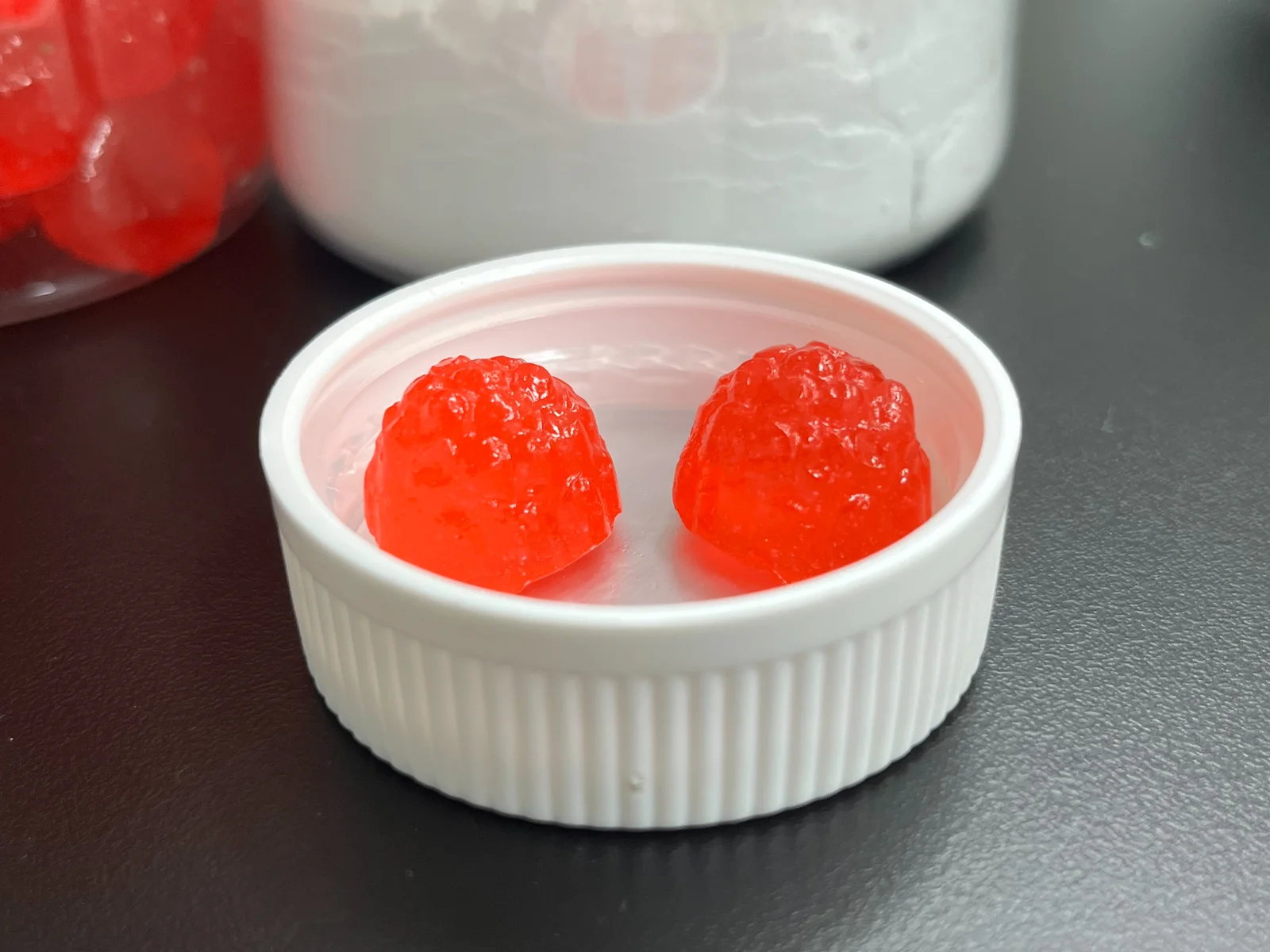
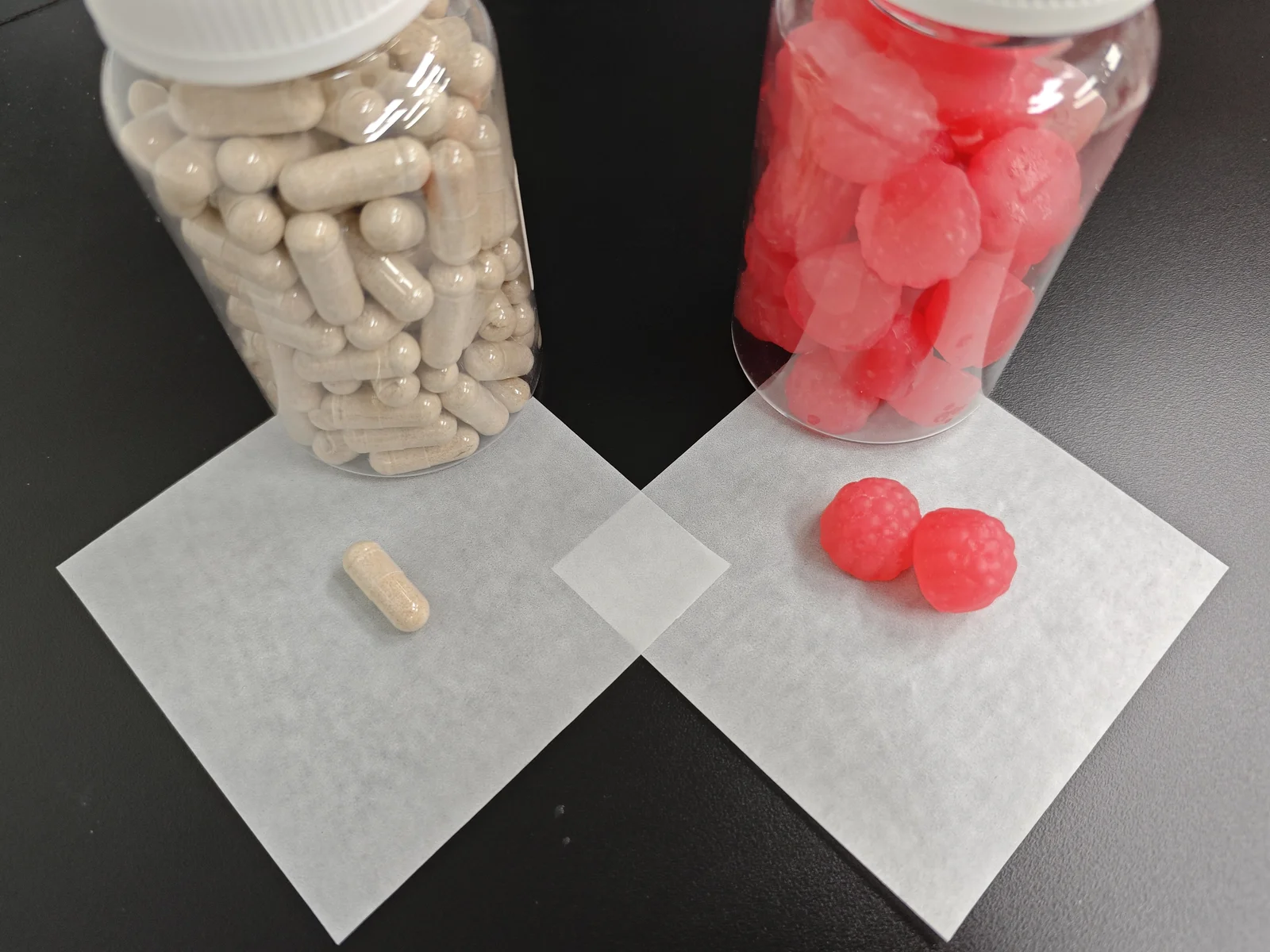
Simply put, gummies are made by dispersing magnesium glycinate into a sugar-based solution and then casting the mixture into molds, whereas capsules consist of magnesium glycinate enclosed within a shell made of cellulose or gelatin.
As a form of magnesium glycinate supplementation, gummies prioritize palatability—ensuring that consumers not only meet their magnesium intake goals but also genuinely enjoy the taste and texture, which encourages consistent, long-term use.
In today's market, gummies—often positioned as snack-like treats—also align well with the aesthetic preferences of the younger generation.
Capsules, by contrast, represent a classic format for nutritional supplements; their primary focus is to deliver functional ingredients to the digestive tract intact, ensuring maximum efficacy.
Designed specifically to optimize functional performance, capsules remain an indispensable category of professional-grade supplements, serving individuals with higher magnesium requirements.
Differences Between Magnesium Glycinate Gummies And Capsules
Understanding the advantages and limitations of both forms helps you work with the manufacturer on targeted changes during Magnesium Gummies formulation development and capsule formulation optimization.
The ways consumers use each product can also guide project strategy, helping packaging and promotion better fit the target audience and improve project performance.
I will explain the differences in the following seven areas.
Product Effectiveness
For magnesium glycinate gummies and capsules, both dietary supplements, your consumers' main concern is still how well the product works and whether it meets expectations, regardless of which form you develop.
Actually, both forms deliver elemental magnesium, with no significant difference in effects at the same intake.
The effects of a magnesium glycinate supplement generally depend on the ingredients used and their purity and content. Equal intake is the key condition for a consistent product experience, with relatively little dependence on how it is taken.
However, many consumers currently believe capsules work better because they contain fewer additional ingredients. The large amount of sweeteners and other ingredients in magnesium gummy supplements can raise doubts about their content and lower expectations of their effects.
Gummies also involve heat processing, moisture, and an acidic pH. As a result, the actual magnesium glycinate content may have declined by the time they reach your consumers, reducing the perceived effects.
However, improvements in manufacturing can ensure that each serving of magnesium bisglycinate gummies provides sufficient magnesium, matching the daily elemental magnesium supplementation offered by capsules.
Other magnesium glycinate gummies benefits include convenience that capsules cannot offer. You therefore do not need to abandon this new dosage form because of concerns about differences in effects.
Ingredient Loading Capacity
This is the most important factor. A dosage form's loading capacity determines how much active ingredient the product can provide to your consumers each day, directly affecting its effects.
We reviewed some common products on the market for your reference, providing a clear comparison of dosage form and loading capacity.
| Product | Weight per Unit | Magnesium Glycinate Provided | Elemental Magnesium Provided |
|---|---|---|---|
| Gummies: Go**, 60 Gummies | Approx. 3.000 g | 366.7 mg | 41.7 mg |
| Gummies: My**, Mixed Berry, 30 Gummies | 5.000 g | 720.6 mg | 70 mg |
| Gummies: Mu**, Combination Formula, Blueberry, 60 Gummies | 3.500 g | 210 mg | 35 mg |
| Capsules: Be**, 90 Capsules, Net Weight 54g | Approx. 0.600 g | 500 mg | 50 mg |
| Capsules: Ze**, 120 Capsules, Net Weight 118g | Approx. 0.983 g | 893 mg | 125 mg |
| Capsules: NA**, 90 Capsules, Net Weight 53.8g | Approx. 0.598 g | 500 mg | 50 mg |
As the table shows, capsules focus more on the amount of the main functional ingredient. One capsule generally provides more magnesium glycinate than one gummy, which is their greatest advantage.
This more concentrated delivery of magnesium allows you to develop high-dose magnesium glycinate capsules for specialist supplement consumers, such as athletes and consumers with a clear diagnosis of magnesium deficiency, building a specialist magnesium supplement brand.
Capsules also offer relatively flexible dosing because they do not have the same shaping and taste requirements.
Whether you reduce magnesium glycinate to increase other ingredients, use pure magnesium glycinate alone, or develop magnesium complex products combining magnesium citrate, magnesium glycinate, and magnesium L-threonate, capsules allow easy adjustments to create a varied product range.
For magnesium glycinate gummies, a more suitable direction is lower-dose magnesium supplementation for general consumers, or low-to-medium doses for children's products such as kids magnesium glycinate gummies.
If you still want to increase elemental magnesium per serving of magnesium glycinate gummies, increasing the number of gummies per serving or the weight per gummy may help balance project costs.
Industry Changes:
However, developments in the food industry in recent years have brought improvements to gel network structure and loading capacity. Some manufacturers can already produce pure magnesium glycinate gummies that provide 100mg of elemental magnesium per gummy.
Based on the theoretical magnesium content of 14.1%, this means a 4g gummy provides 709.22mg of magnesium glycinate. In comparison, magnesium glycinate capsules typically weigh 600–944 mg each and contain approximately 500–893 mg of magnesium glycinate raw material.
The two forms can therefore now achieve similar magnesium loading per unit. However, during development, you still need to assess each manufacturer's magnesium glycinate gummy samples and check finished product reports against your requirements for third party tested magnesium glycinate gummies.
Ease Of Use
The chewable magnesium gummies format is designed specifically for convenience. As a ready-to-eat product, these gummies let people supplement with magnesium glycinate anytime, anywhere, making them more convenient than any other form.
When comparing magnesium gummies vs powder, gummies need no special container or mixing. They also require no water, unlike capsules, and do not even require tilting the head back to swallow.
You can reinforce this advantage through packaging, such as clear PET bottles of 150mL or 250mL that fit in one hand for easy access anytime, anywhere.
They can also be placed in travel bags, backpacks, or shoulder bags to suit many lifestyles, fitting into your consumers' daily routines without concerns about the gummies being crushed out of shape.
This convenience also allows bottled gummies to remain on household tables, desks, and bedside tables. The bottle label and the gummies' attractive appearance can then provide a valuable promotional effect for your brand.
Magnesium glycinate capsules have no clear advantage here. Although they are also portable, few people are willing to take them dry without water.
If your brand wants to develop magnesium supplements for long-term use with an everyday snack positioning, magnesium supplement gummies are our first recommendation.
Long-Term Adherence
Magnesium supplements that support long-term intake therefore offer an advantage in the experience of their effects and can significantly improve consumer satisfaction and repeat purchases.
A magnesium glycinate gummy still has the advantage in this respect.
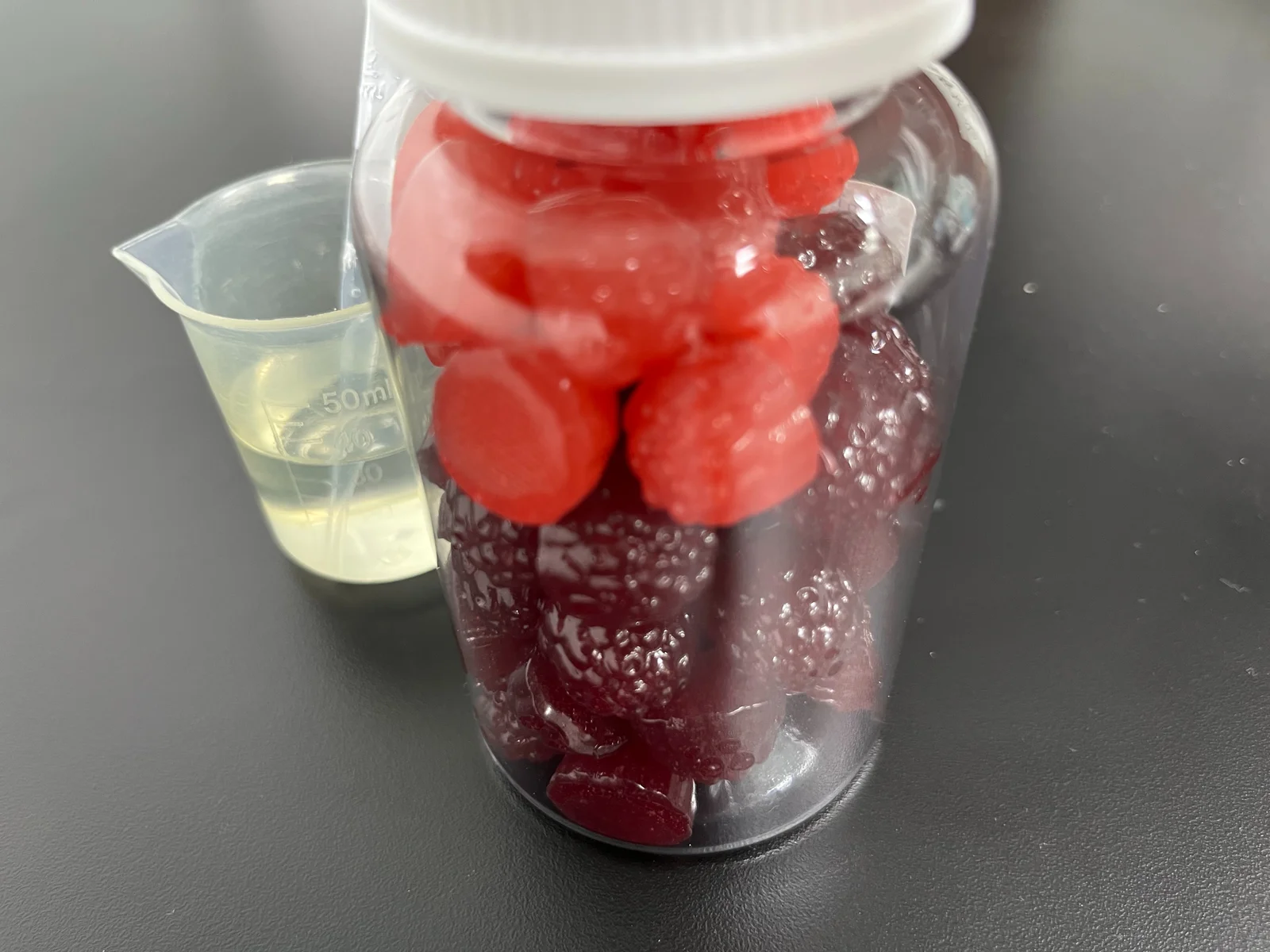
The magnesium supplement gummy format offers sweetness and a fruity aroma. This pleasurable experience often makes consumers view taking magnesium glycinate as a reward, helping them develop a daily habit.
Capsules can feel like taking medicine, especially when the body's positive response to supplementation is not obvious at first. Consumers may give up because of the inconvenience, or become tired of the routine and feel that missing a dose does not matter.
Discussing attractive magnesium glycinate gummies with mild flavor and natural sweetness with your Magnesium Gummies supplier is therefore an important step toward improving long-term adherence.
Your brand can also position them as an after-meal treat. Alongside helping reduce magnesium's osmotic effect in the intestine, linking this pleasure to a particular setting and time can create a daily ritual, supporting continued use and repeat purchases.

Active Ingredients And Other Ingredients
Each dosage form has its own development priorities. Gummies require coordinated adjustments to the sweetener system, gel texture, and flavor, while capsules focus more on the shell.
Overall, you still need to consider your project's target consumers and the regulations in the sales market.
Main Ingredient:
Both use magnesium bisglycinate, but the raw materials can differ, particularly in the degree of chelation.
There is a potential trap here. The magnesium glycinate we discuss is a substance formed through a chemical reaction between glycine and magnesium ions. This is what provides relatively high magnesium content, gentle absorption, and high bioavailability.
However, physical blends of glycine powder with magnesium oxide or magnesium chloride are sometimes passed off as magnesium glycinate. Magnesium oxide may also be added to regular magnesium glycinate and called buffered magnesium glycinate. Prices can differ by 3-10 times.
These materials can seriously affect taste and product effects. We do not recommend using them and advise you to watch for this naming trap.
You can explicitly ask the manufacturer to use “fully chelated magnesium bisglycinate” or specify the raw material supplier.
Also request a COA for the chelated magnesium raw material, covering key parameters including:
-
Name
-
Content
-
Form
-
Degree of Chelation
-
Test Plan
If needed, you can request a third-party report on the degree of chelation (FTIR infrared verification).
Other Ingredients:
Sweeteners and pectin are the key ingredients in gummies. Sucrose is normally used, but for sugar free magnesium glycinate gummies, you can choose erythritol or maltitol as the sweetener.
Pectin is our first recommendation. It helps you develop vegan magnesium glycinate gummies while avoiding the deformation and unstable texture that gelatin formulas can experience at high temperatures.
Capsules focus more on shell material, usually using low-cost bovine or porcine gelatin. If your brand emphasizes vegan magnesium glycinate capsules, you can consider HPMC or pullulan, a premium niche option.
The overall product composition is shown below:
| Gummies | Capsules | |
|---|---|---|
| Sweeteners | Sucrose Erythritol (Sugar-Free Formula) Maltitol (Sugar-Free Formula) |
\ |
| Gelling / Shell Materials | Pectin (Vegan) Gelatin |
Gelatin HPMC (Vegan) Pullulan (Vegan) |
| Functional Ingredient | Fully Chelated Magnesium Bisglycinate | Fully Chelated Magnesium Bisglycinate |
| Flavors / Colors | Flavor Adjustment Color Adjustment |
No Flavoring Needed Capsule Shell Coloring (If Needed) |
| Other Additives | Acidity Regulators Emulsifiers |
Powder Flow Aids (If Needed) Powder Lubricants (If Needed) |
Swallowing Experience
This feature directly affects which consumers can use the product and needs close attention. A capsule's hard shell can present physical challenges for some consumers.
For magnesium glycinate capsule, a weight of 1g per capsule is enough to affect most consumers' willingness to take it. For some groups, it also creates a risk of the capsule becoming lodged in the throat.
We therefore recommend conducting sensory tests of the capsule shell with the manufacturer and using multiple capsules per serving for general-use products.
In comparison, magnesium gummies perform better in this respect. Their softer texture and chewable format help avoid some of the difficulties associated with swallowing.
Even without changing the formulation, you can adjust moisture content to change how soft or firm gummies feel when chewed, helping suit consumers of different ages.
However, gummies, including magnesium gummies for kids, still pose a choking risk, particularly when accidentally eaten by young children.
You can provide warnings for parents on the packaging and use push-and-turn caps to help physically prevent children from accidentally consuming the gummies.
Taste And Texture
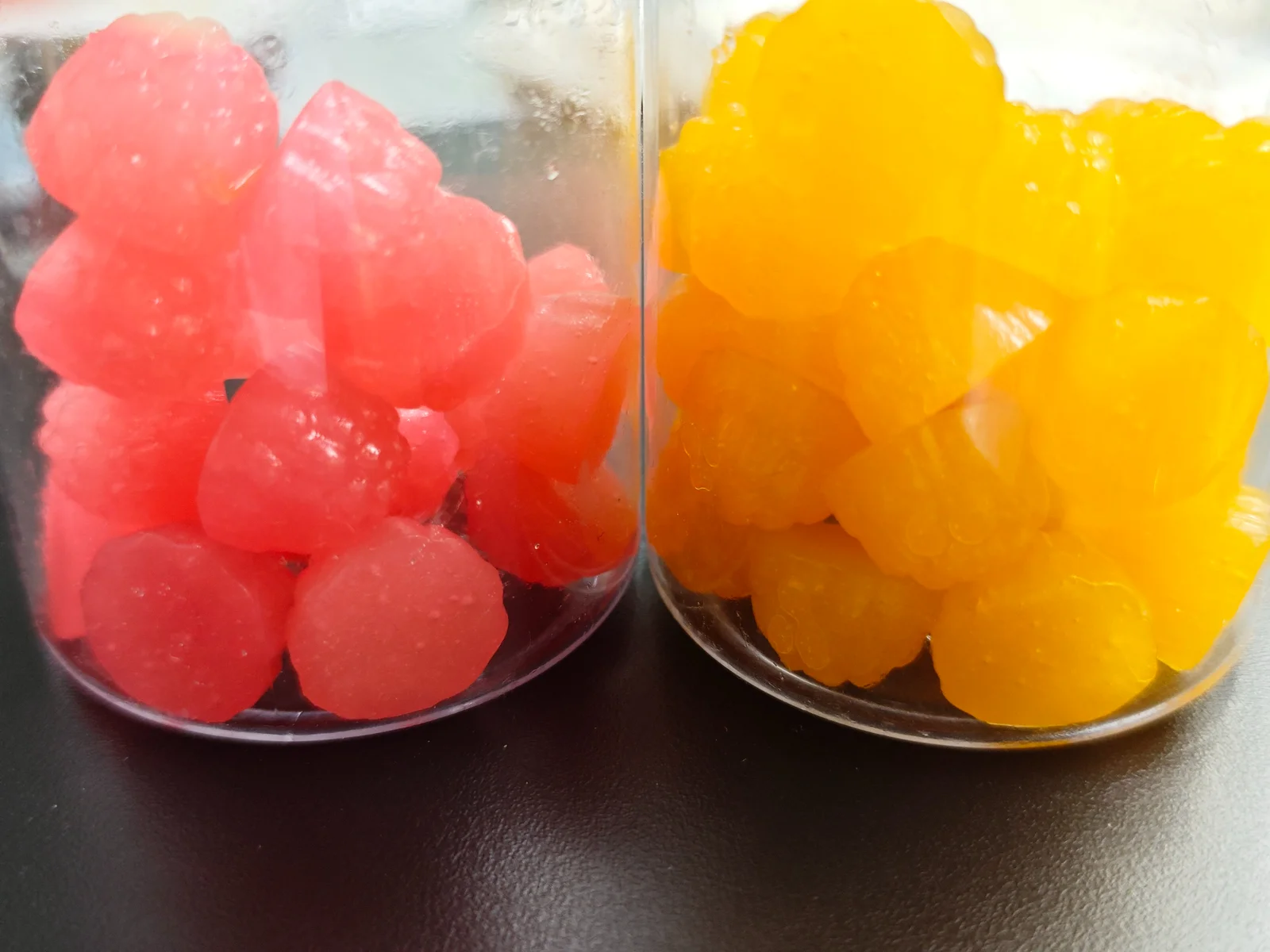
These are major concerns for many consumers, especially with magnesium glycinate supplement gummies. Poor texture or an unusual flavor may lead more consumers to choose tasteless magnesium glycinate capsules.
Magnesium glycinate raw material has a slightly bitter, metallic taste. In high-content gummies, these notes can become pronounced toward the end of chewing unless specific taste-masking measures are used.
If magnesium glycinate powder is not ground finely enough, it can also create a noticeable grainy texture in the gummies, reducing consumers' enjoyment of the taste and texture.
We therefore recommend considering blueberry magnesium gummies. In our view, blueberry is one of the best flavors for masking magnesium's taste. A layered mixed berry flavor combining blueberry, raspberry, and strawberry is also worth considering.
You can set stricter particle-size requirements with the Magnesium Gummies manufacturer. Specify the particle-size distribution and test method in the raw material specification or COA, then assess grittiness through sensory testing of the finished product to avoid poor texture.
For magnesium glycinate capsules, the shell masks the raw material's taste and texture, leaving little to adjust in this respect.
Development Priorities For Commercial Projects
The differences above reflect consumer concerns to consider when developing custom Magnesium Gummies and magnesium glycinate capsules. As commercial projects, both also require attention to storage and cost so that you can assess potential project risks.
Storage:
Magnesium glycinate capsules commonly sold on the market usually have a shelf life of 24 months. Gummies typically have a shorter shelf life of 12-24 months because of their higher moisture content. The two forms also have different storage requirements.
Capsules seal dry magnesium glycinate powder inside a shell. The main concerns are therefore the shell's natural degradation over time and preventing it from absorbing moisture and softening. Storage conditions are relatively less demanding.
In gummies, magnesium glycinate powder is dispersed in a moist gel network. Pay attention to:
-
Deterioration of the gel texture over time
-
Preventing high temperatures and humid heat from accelerating chelated magnesium breakdown in an acidic pH environment
-
Light-induced pigment degradation and fading, especially with natural colors
-
Spoilage caused by microbial growth
-
Moisture absorption and water release in humid conditions, causing gummies to stick together in clumps
-
Deformation caused by physical compression
These factors create more demanding storage requirements for gummies.
You can store magnesium supplement gummies awaiting sale after factory delivery in a relatively cool warehouse protected from light.
You can also discuss appropriate surface drying with the Magnesium Gummies factory to improve the shelf life stability of the magnesium glycinate gummies.
Cost:
Alongside the additional storage costs after factory delivery, you need to assess the project's own costs to decide whether gummies or capsules better fit your brand's current development strategy.
We collected some magnesium glycinate prices and corresponding purchasing specifications for your reference:
| Product (From various brands) | Purchase Price (EXW) / USD | Selling Price / USD |
|---|---|---|
| Bi**: Magnesium Glycinate Combination Gummies, 3g×60 Gummies/Bottle |
2.70 (100–999 Units) 2.40 (1,000–9,999 Units) 1.80 (10,000 Units and Up) |
16.99 |
| Ji**: Magnesium Glycinate Combination Gummies, 60 Gummies/Bottle |
3.1 (1,000 Units and Up) | 14.55 |
| Bi**: Magnesium Glycinate Capsules, 60 Capsules/Bottle |
2.00–2.70 (500 Units and Up) | 14.49 |
| An**: Magnesium Glycinate Capsules, 60 Capsules/Bottle |
0.98 (1,000–2,999 Units) 0.96 (3,000–9,999 Units) 0.93 (10,000 Units and Up) |
15.99 |
Overall, magnesium glycinate gummies usually cost more to purchase per unit than capsules, and their selling prices are also higher.
Although one gummy provides less elemental magnesium than one capsule, the complex gummy manufacturing process and each project's development needs mean raw materials account for only a limited share of the total cost per gummy.
Magnesium glycinate capsules can therefore be your first choice for low-cost, function-focused products. Gummies suit a long-term brand strategy focused on premium everyday products.
FAQ
1. Can I Use Magnesium Malate And Glycinate Together In Product Development?
Yes. You can develop supplements combining magnesium malate and magnesium glycinate in either gummy or capsule form. Malic acid participates in ATP metabolism and is commonly used in post-workout product development.
You can position the product for active consumers around support for normal energy metabolism and muscle function, broadening the functional profile of pure magnesium glycinate gummies or capsules.
However, magnesium malate has a more noticeable sour taste, a lower pH, and lower magnesium content than magnesium glycinate. These points need to be discussed with the manufacturer during development.
2. What Do Calcium, Magnesium And Zinc Gummies Do?
Products positioned as calcium magnesium zinc gummies are combination mineral gummies for bone health support. Your brand can develop and promote them for growing teenagers and older adults with greater bone health maintenance needs.
They are typically made with calcium citrate, zinc citrate, and magnesium glycinate. For adults, we recommend an elemental calcium-to-magnesium-to-zinc ratio of 10 : 4 : 1, rather than a raw material ratio. For children's gummies, we recommend 5 : 2 : 1 as a draft for formulation development.
3. What Should I Consider For The Best-Tasting Magnesium Gummies?
Focus first on the magnesium glycinate raw material's particle size and its dispersion during processing. Fine enough particles help reduce grittiness and graininess; this is primarily a requirement for the raw material supplier.
Improper manufacturing, such as unsuitable homogenization equipment or settings, or settling and clumping in the kettle, can leave powder lumps in individual gummies or make some batches harder.
Confirm the situation with the Magnesium Gummies producer and request the batch COA for analysis before discussing further product improvements.
4. Magnesium Gluconate Vs Glycinate, Which Is Better?
It depends on the project. Products developed as magnesium gluconate gummies offer better flavor, less metallic taste, and a mild mouthfeel. Better water solubility can also reduce the texture burden of undissolved particles and help you develop children's magnesium gummies.
However, I still prefer magnesium glycinate for standard products. Magnesium gluconate contains only about 5% magnesium, roughly one-third as much as magnesium glycinate. This makes high-content magnesium gluconate supplements harder to develop in either gummy or capsule form.
5. What Is A Full Spectrum Magnesium Supplement?
Products worth developing, but you need to assess it carefully, focusing on ingredient composition. This is another term for a combination magnesium supplement, typically using:
-
Magnesium glycinate (relaxation and sleep)
-
Magnesium malate (muscle fatigue)
-
Magnesium taurate (cardiovascular)
-
Magnesium threonate (brain cognition)
These ingredients are combined in target ratios to develop magnesium complex gummies. The variety of ingredients creates a distinctive product story that can help your brand develop premium products.
However, some formulas may use mostly inexpensive ingredients with very small amounts of the other magnesium sources to claim a “combination.” Others may use unsuitable ingredients such as magnesium oxide. These can all be marketed as “full spectrum.”
6. What Should I Consider When Developing The Best Magnesium Supplement For Women?
Focus on formulation design, starting with elemental magnesium content. Requirements differ by region. In the United States, for example, the FNB sets the magnesium RDA for women aged 19–30 at 310 mg/day, including both dietary and supplemental sources. You therefore should not choose capsules simply to achieve a higher magnesium content.
For example, for a specification of 100-200mg elemental magnesium, magnesium glycinate gummies for women may be a better choice that also offers good taste.
Adding other functional ingredients, such as magnesium + chasteberry extract gummies or magnesium vitamin b12 gummies, can also help differentiate your brand in the women's supplement market.
7. What Are The Benefits Of Magnesium Glycinate Products For Men?
The main benefits relate to exercise. Magnesium participates in nerve regulation and muscle relaxation. Magnesium glycinate supplements can reduce post-exercise cramps caused by magnesium deficiency and support normal muscle relaxation, helping improve men's muscle training and growth.
Your brand can build a range of exercise-related magnesium products around this, for example through combination formulas with CoQ10 gummies or creatine gummies with magnesium.
8. Are Magnesium Glycinate Gummies as Effective As Pills?
Yes, they can be equally effective. Much like gummies and capsules, as long as they provide the same amount of magnesium glycinate, they can deliver the same results for your consumers. However, pills, like capsules, are designed primarily to deliver the active ingredient, whereas gummies contain a significant proportion of sweeteners and pectin. As a result, consumers typically need to take more magnesium glycinate gummies than pills to get the same effect.

Final Thoughts
Overall, both forms have their advantages.
If you want higher and more consistent product effects, you can choose to develop magnesium glycinate capsules.
If you plan to build a distinctive premium product story, magnesium glycinate gummies are the first choice because they offer more customization options.
If you have further questions, please contact magnesium glycinate supplement experts at Sucotond.